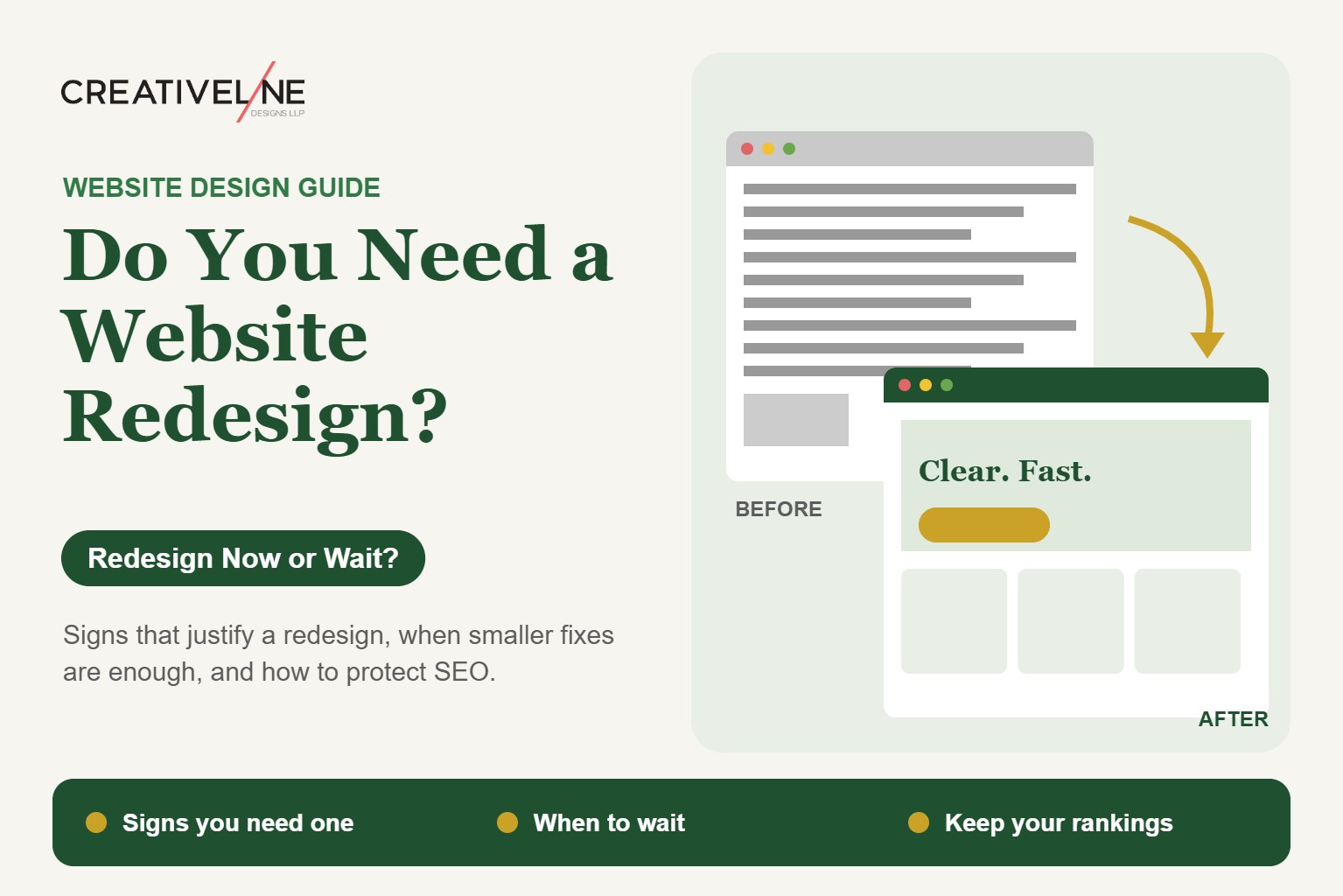
A website redesign is one of those projects businesses either start too early or put off for years. Some owners rebuild a perfectly good site because a competitor launched something shinier. Others keep a slow, outdated site that quietly loses enquiries every week. The right answer depends on what your current site is failing to do, not on how old it is. If you do decide to go ahead, working with experienced web UI/UX design services helps you fix the real problems instead of just changing the look.
This guide helps Indian business owners decide honestly: do you need a website redesign now, or would smaller fixes do the job?
Website Redesign vs Website Refresh: Know the Difference
Before deciding, separate two very different projects:
- A refresh updates content, images, colours, a few page layouts and obvious usability problems. The structure, platform and URLs mostly stay the same.
- A full website redesign rethinks structure, user journeys, design system and often the platform. It takes longer, costs more and carries SEO risk if handled carelessly.
Many sites that look like they need a redesign actually need a focused refresh plus better content.
Signs You Genuinely Need a Website Redesign
You are likely a good candidate if several of these are true:
- The site is not usable on mobile. If visitors have to pinch and zoom, or buttons are too close to tap, you are losing most of your audience. In India, the majority of browsing happens on phones.
- Your business has changed. New services, new markets, a rebrand or a shift from B2C to B2B mean the old structure no longer tells the right story.
- Enquiries are falling while traffic holds. If people still arrive but fewer contact you, the site is failing at conversion, which usually points to structure and user experience, not just visuals.
- The site is painfully slow. When speed problems come from an outdated theme, heavy page builders or old code, patching may cost more than rebuilding.
- Your team cannot update it. If every small text change needs a developer, the platform is holding you back.
- Security and maintenance are a worry. An unsupported theme or plugins that can no longer be updated safely are a real business risk.
- It no longer matches your brand. If your packaging, social media and sales material look modern but the website looks ten years old, customers notice the gap.
Who Should Wait Before a Website Redesign
A website redesign is not always the best use of budget. Consider waiting if:
- The site works but traffic is low. That is usually a content, SEO or marketing problem. A new design will not bring visitors on its own.
- You are about to change your offering. If your products, pricing or positioning will change in the next few months, finish that work first so you do not redesign twice.
- You have not measured anything. Without analytics and conversion tracking, you cannot tell what the redesign should fix or whether it worked.
- The problems are specific. A slow contact form, a confusing menu or weak calls to action can often be fixed in days, not months.
- The only reason is boredom. Your team sees the website every day; most customers do not. Familiar is not the same as outdated.
A Quick Self-Assessment Before You Decide
Answer these questions with real data where possible:
- What percentage of visitors come from mobile, and how does the site perform for them?
- How many enquiries or sales did the site produce in the last six months, and is that trend going up or down?
- Which pages get the most traffic, and which pages do visitors leave from most often?
- Can your team update key content without developer help?
- Does the site reflect your current services, prices, portfolio and brand?
If most answers point to structural problems, a website redesign is justified. If they point to one or two weak areas, fix those first and review again in three to six months.
How to Redesign Without Losing Search Rankings
The biggest hidden risk in a website redesign is losing organic traffic that took years to build. Protect it by planning SEO from the start:
- Inventory existing URLs. List every page that gets traffic or has backlinks before anything changes.
- Keep URLs where possible. When URLs must change, set up 301 redirects from each old URL to its closest new equivalent.
- Preserve content that ranks. Improve it, but do not delete high-performing pages simply because they do not fit the new design.
- Test before launch. Check speed, mobile usability, broken links and page titles on a staging site.
- Monitor after launch. Watch Google Search Console for crawl errors and traffic changes for several weeks.
If the domain or URL structure is changing, Google’s official guidance on site moves with URL changes explains the recommended steps.
What a Website Redesign Typically Involves
- Discovery: goals, audience, analytics review and competitor research.
- Structure: sitemap, user journeys and content plan.
- Wireframes and design: page layouts, then the visual design system.
- Development: building on the chosen platform with speed and SEO in mind.
- Content and migration: moving and improving content, setting redirects.
- Testing and launch: cross-device testing, analytics setup and post-launch monitoring.
Budget depends heavily on the number of pages, custom features and whether ecommerce is involved. Our detailed breakdown of website design cost in India explains the main pricing factors so you can plan a realistic budget.
Frequently Asked Questions
How often should a business redesign its website?
There is no fixed cycle. Many businesses review their site every two to four years, but the decision should be driven by performance, business changes and technology, not the calendar.
Will a website redesign hurt my SEO?
It can if URLs change without redirects or ranking content is removed. With a proper URL inventory, 301 redirects and careful testing, a redesign can maintain or improve search performance.
How long does a website redesign take?
A small business site may take a few weeks, while larger or ecommerce sites often take several months. Content readiness and approval speed usually affect the timeline as much as design and development.
Should I redesign or just update my existing website?
If the problems are limited to content, a few layouts or specific usability issues, an update is usually enough. If mobile experience, structure, platform and branding all need work, a full redesign makes more sense.
Conclusion
A website redesign is worth it when your site is holding the business back: poor mobile experience, falling enquiries, outdated structure or a platform your team cannot manage. If the issues are smaller, targeted fixes will usually deliver faster results for less money. Measure first, decide based on evidence, and protect your search rankings whichever path you choose.
