A label is often the only thing standing between a shopper and your product. On a crowded kirana shelf, a quick commerce thumbnail or a marketplace listing, product label design has to identify the brand, explain the product, meet Indian labelling rules and still look good enough to pick up. Brands that treat labels as an afterthought usually end up reprinting. Working with a specialist product packaging design team helps you plan the label as part of the whole pack from the start.
This guide walks through the parts of a good label, the information hierarchy, the compliance details Indian brands need to plan for, and the print decisions that affect how the finished label looks.
What Good Product Label Design Has to Do
Every label has four jobs, and product label design is about balancing all of them on a small surface:
- Get noticed: stand out from nearby products through colour, shape or contrast.
- Be understood quickly: brand, product name and variant should be clear within a couple of seconds.
- Build trust: claims, certifications and clear details reassure buyers that the product is genuine.
- Stay compliant: carry the mandatory declarations in a readable, correct form.
The Anatomy of a Product Label
Whether the pack is a spice pouch, a cosmetic bottle or a cleaning product, product label design works with the same building blocks.
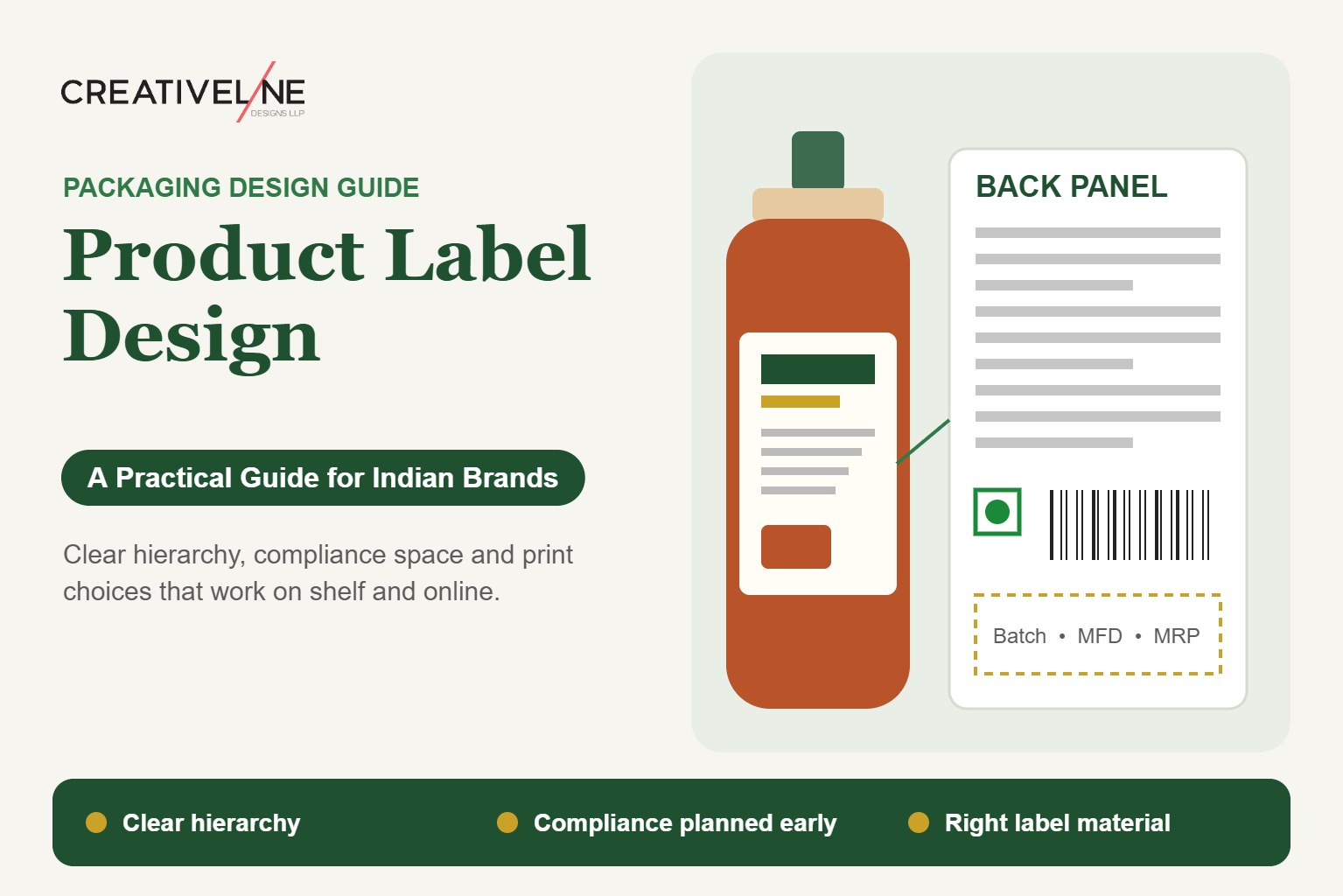
Front Panel
The front panel carries the brand logo, product name, variant, key benefit and net quantity. It should be designed for the shelf and the online thumbnail at the same time, which means fewer words and bigger type.
Back or Side Panel
This is where the detail lives: ingredients or composition, directions for use, storage instructions, manufacturer details, customer care information and regulatory declarations.
Variable Data Area
Batch numbers, manufacturing dates, expiry or best-before dates and sometimes MRP change with each production run. Good product label design leaves a clear, uncoated area for these to be printed or stamped later.
Codes and Symbols
Barcodes, QR codes, recycling marks, the vegetarian or non-vegetarian symbol for food, and certification logos all need space and minimum sizes to work.
Building a Clear Information Hierarchy
The biggest problem with most Indian labels is not ugliness but clutter. Everything is shouting, so nothing is heard. A simple hierarchy fixes this:
- Level 1: brand and product name, the largest elements on the front.
- Level 2: variant, flavour or fragrance, supported by a colour code across the range.
- Level 3: one or two key benefits or claims, not ten.
- Level 4: mandatory and supporting information, set in a clean, consistent style on the back.
A colour-coded variant system is one of the most useful tools in product label design for ranges. When every flavour or size follows the same layout with a different accent colour, shoppers can find their usual variant instantly and the whole range looks organised on the shelf.
Labelling Compliance Indian Brands Need to Plan For
In India, most packaged goods must carry declarations under the Legal Metrology (Packaged Commodities) Rules, 2011, administered by the Department of Consumer Affairs. These generally include the manufacturer or packer’s name and address, the common name of the commodity, net quantity in standard units, month and year of manufacture, MRP inclusive of all taxes and consumer care details. The rules have been amended several times, so check the current text for your category.
Food products must also follow the FSSAI labelling and display regulations. Typical requirements include the name of the food, a list of ingredients, nutritional information, the veg or non-veg symbol, declarations for certain additives and allergens, the FSSAI logo and licence number, and date marking. Some requirements, such as minimum font sizes and the size of the veg symbol, depend on the size of the pack. The FSSAI website publishes the regulations and updates.
Cosmetics, supplements and other regulated categories have their own rules. A designer is not a substitute for a regulatory consultant, but the design team should know where each declaration will sit and how much space it needs before concepts are approved. That is why compliance belongs at the start of product label design, not at the end.
Label Shape, Material and Print Choices
Print choices are part of product label design, because how a label is produced changes how it looks and how long it lasts.
- Paper labels: economical and good for dry products, but they can smudge or tear with moisture.
- BOPP and vinyl labels: resist water and oil, so they suit beverages, cosmetics, sauces and household products.
- Transparent labels: create a “no label” look on glass or clear bottles, but need a white underprint to keep text readable.
- Die-cut shapes: a custom shape can make a label memorable, but check that it works on the labelling machine.
- Finishes: matte, gloss, foil and embossing add character; use them for one or two elements rather than the whole label.
Always design to the printer’s exact template with bleed, safe zones and the correct colour mode, and check a physical proof on the actual container. Curved bottles distort artwork, so key text should stay away from the edges that wrap around.
Designing Labels for Quick Commerce and Marketplaces
Many shoppers now see a label first as a small image on Blinkit, Zepto, Amazon or Flipkart. Product label design for these channels needs a few extra checks:
- Is the product name readable when the image is reduced to a thumbnail?
- Does the variant colour stand out against a white background?
- Is the net quantity clear, since buyers compare pack sizes on screen?
Label design is one step in a larger packaging workflow that also covers structure, dielines, mockups and printer coordination. Our article on the packaging design process from brief to print-ready files explains where the label fits into that sequence.
Common Product Label Design Mistakes
- Filling the front panel with too many claims and badges.
- Setting mandatory text too small or in low-contrast colours.
- Forgetting a space for batch numbers and dates.
- Using a different layout for every variant, so the range looks unplanned.
- Approving artwork without a printed proof on the real container.
- Copying competitor label styles so closely that the brand becomes forgettable.
Frequently Asked Questions
What should be included on a product label in India?
Most packaged goods need details such as the manufacturer or packer’s name and address, product name, net quantity, month and year of manufacture, MRP and consumer care details. Food products need additional FSSAI information such as ingredients, nutrition, veg or non-veg symbol and licence number. Check current rules for your category before printing.
Which label material is best for food products?
It depends on the product and storage. Paper labels suit dry goods like spices and snacks, while BOPP or vinyl labels are better for products exposed to moisture or oil, such as beverages, pickles and sauces.
How many product label designs do I need for a range?
Usually one master layout with variations for each variant and pack size. A consistent system saves design time, reduces errors and makes the range easier to recognise.
Can I design one label for both retail shelves and online listings?
Yes, if the front panel is designed with the thumbnail in mind. Keep the product name large, the variant clearly colour-coded and the net quantity easy to read.
Conclusion
Strong product label design is a balance of shelf impact, clear hierarchy, correct declarations and sensible print choices. Plan compliance and variable data early, build a system that works across your range, and test the label on the real container before a full print run. A well-planned label saves reprinting costs and helps every pack sell a little harder.
This article is general information, not legal advice. Regulations and official procedures change, so confirm current requirements with the relevant authority or a qualified professional. Last reviewed: September 2026.
